This write-up describes the project state completed on June 30, 2026.
The larger research question is still open. The project has not yet picked a final
claim such as action-consequence prediction, social behavior, or model comparison.
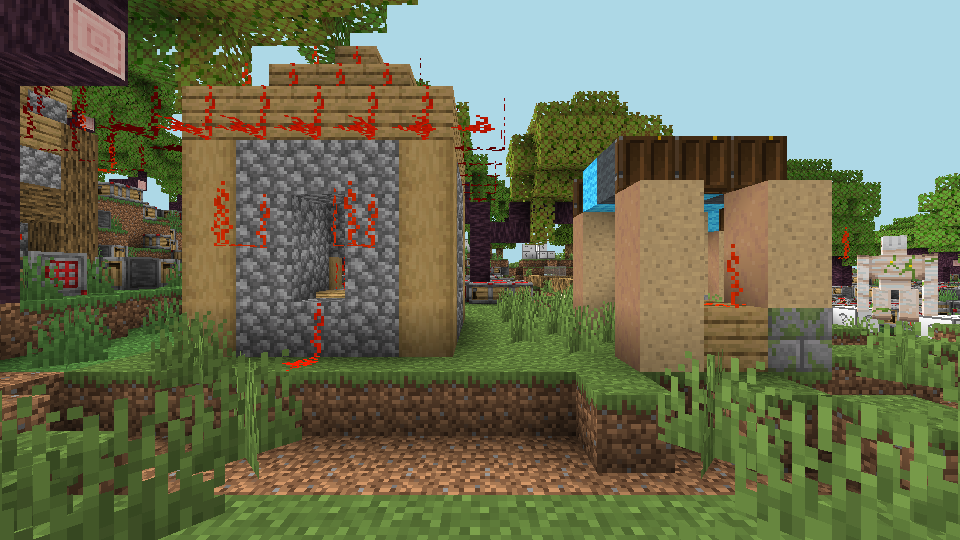
The current work is more basic: make a natural Minecraft village setup where those
questions can later be tested without relying on a staged toy world.
For this check, I ran four provider-backed model lanes through the same small
Minecraft LLM-agent harness: two ModelScope lanes using Qwen Plus and Qwen Max,
plus OpenAI and Gemini reference lanes.
Outside ModelScope, I stayed within available free-tier or low-quota access. I
did not run frontier paid comparisons such as GPT-5.5 or Claude Opus 4.8 for this
post, so the results should be read as a harness check, not a frontier-model
ranking.
This is not a leaderboard, not a broad model claim, and not a decision about
whether interaction history can beat an LLM prior. The point was narrower: check
whether the current environment can support concrete Minecraft work, repeated
screenshots, inventory review, and blocker analysis across multiple model lanes.
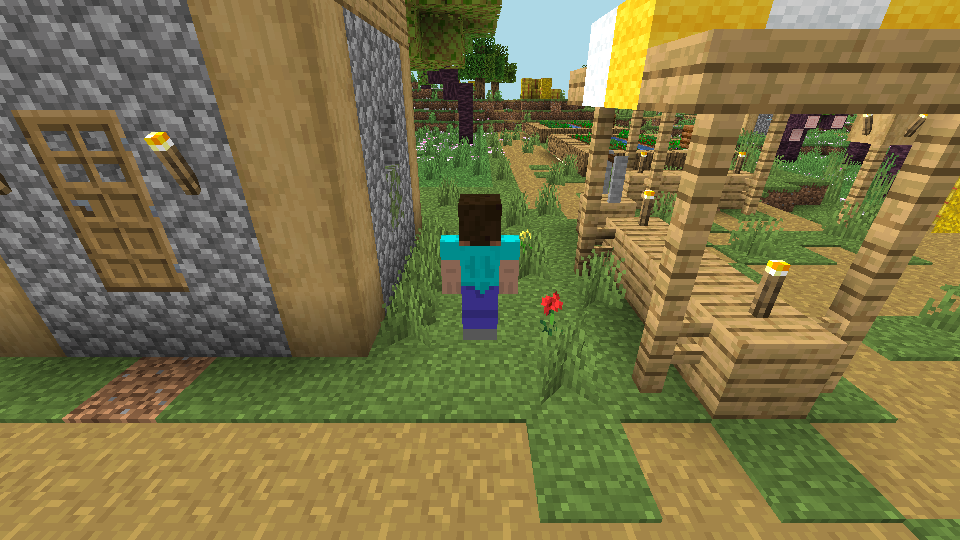
Minecraft natural village - environment check
One practical Minecraft goal, four attempts to reach it.
Each lane started from the same natural village scenario. The actor was asked to
create a useful village-adjacent work point: collect wood, craft basic materials,
make or use a crafting table, recover from movement blockers, and continue toward
simple material work instead of only describing a plan.
120 completed cycles384 visual captures5.05M total tokens1 stone follow-through